| Back to Back Issues Page |
 |
| The Jewelry And Poly News, Issue #005- May 2011 May 05, 2011 |
In This IssueNews
New tutorials
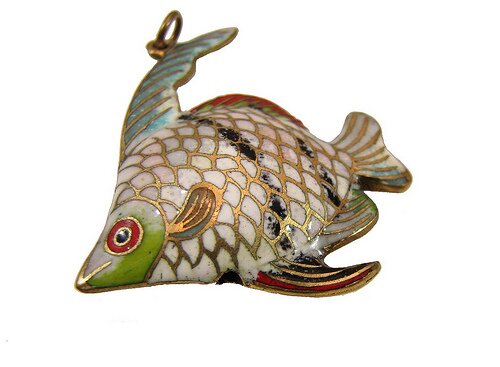
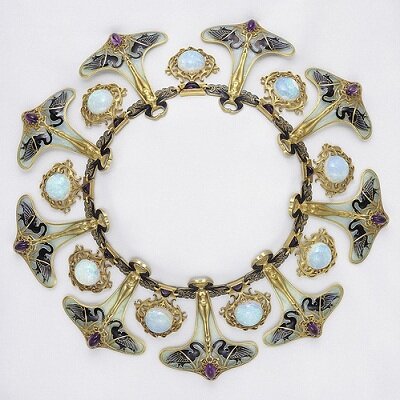
NewsJewelry Making Techniques - A Candy Store For Jewelry Designers And CraftersThere are many ways to make jewelry and some techniques are highly professional and great skills are needed to do them, others are achievable by less skilled crafters, like me. During my quest to make this site, I have bumped into many terms used for jewelry making, which I had heard about, but didn’t really know what was, not to speak of how they were done. I therefore decided to find out more about the world of jewelry techniques. Enamel Jewelry When I think of enamel jewelry, I think of my grandmother. She had these lovely, cream colored earrings with golden lines, shaped like leafs. Now I know that they were enameled Guilloche, but sadly I don’t know what happened to them after she died, at the age of 99. Enamel jewelry is still in fashion, although not to the extent that it was in the early 20th century. However it is by no means a modern form of jewelry. Actually it dates back to ancient Egypt, which is not so strange, since they invented glass. read more Cloisonne Jewelry - Artistic Beauties Of Glass And Metal I am sure you have seen Cloisonné jewelry, and probably also have some beautiful pieces in your jewelry box. If so, you know how amazing this enameling technique is with its small, delicate, colorful cells with shiny, polished metal in between. So there is no wonder that it has mesmerized us for thousands of years. Cloisonné is French and means cell or compartment, and that is what is so distinct about this jewelry style. Cells filled with glass and separated by wirework. Enameling Guilloche - Beauty Invented By Faberge Guilloche is French and means Engine turning. I know that this sound a bit strange, but this enameling technique is done by first engraving the metal plate and then adding the enamel, to create more depth in the designs. A Guilloche is a very precise and intricate pattern that is mechanically engraved into the metal base. The engine turning or Guilloche is named after the man who invented the machine that could scratch detailed patterns onto metal. The term Guilloche is used on the engraving technique and is actually not a name of a particular enameling technique. Plique-a-jour - Glass Paintings In Miniature Plique-a-jour enameling is the name of a technique which probably is the most sophisticated and beautiful of all enameling techniques. Imagine the glass paintings in a church, with the sun shining through the different sections of colored glass. Then shrink that image to a small piece of jewelry and you have Plique-a-jour. It resembles Cloisonnè. Thin wires are used to create the “skeleton” of the piece, and enamel is filled into the cells. What makes the difference is that Plique-a-jour does not have a backing, so you can see through the enameling. And the lack of backing is what makes this technique so unique and beautiful, but also very hard to master. read more Champleve And Basse Taille - Enameling Techniques You Can Combine Champlevé means raised plane in French. It is a technique where the pattern is carved out of a metal plate and then the low areas are filled with enamel. The base is quite rough and originally only opaque enamels are used. In the medieval they used a soft base-metal that was gilded when the piece was finished. The technique is suitable for covering large areas with enamel. It resembles and was actually succeeded by Basse Taille, a technique used to create high quality Gothic works. Basse taille works are finer, the recesses are modeled and only translucent enamel is used. read more New Tutorials
Eye Catching Chinese Brocade Beads I do not know if there is such a thing as Chinese brocade, but that was the first thing that came into my mind, when I had made these beads. Red, black and gold, they kind of looked oriental to me. I made this tutorial mainly so that you can see one of the amazing ways you can use the Variegated Composition leaf. These metal leafs are most beautifully patterned, and you can get them in shades of red, green and black. This means that the gold has a deep, warm tone, with patterns in reddish, greenish or blackish. They bring more life to your projects than simple gold leaf, and are amazing with the technique used in this tutorial. Use A Paper Puncher To Create Lovely Inked Flower Beads To make these flower beads, I used a paper puncher; you know the kind you use for scrapbooking. You can actually use lots of scrapbooking supplies with polymer clay, like rubber stamps, embossing powder, heat gun, glitter, eyelets, inks and chalk, only to mention some, and you can use polymer clay to make scrapbooking embellishments. So these two crafts often go hand in hand. Not all paper punches are suitable for polymer clay. The smallest ones are not strong enough to cut through the clay, so the one you use must be of some size. The clay must be very thin, but not so thin that it breaks, and of course it must be cured before you punch it. see the rest of the tutorial |
| Back to Back Issues Page |